
Quick scroll :
Click the headers to scroll back to the top!
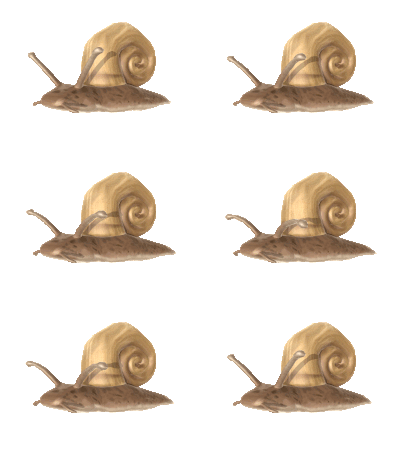
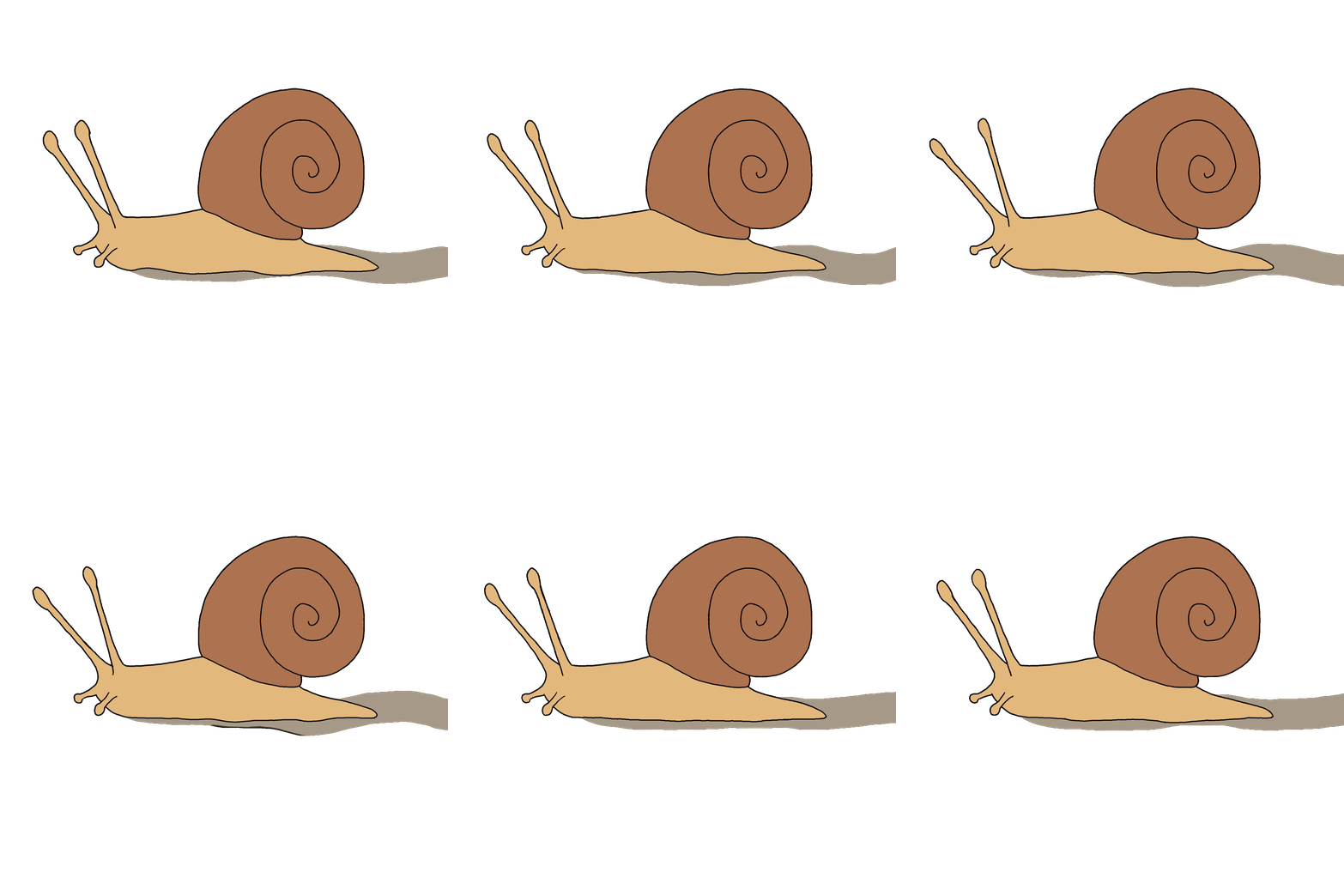
A snail is a mollusk with a shell. The name is most commonly used for land snails, terrestrial gastropod mollusks with lungs. However, the common name snail is also used for most members of the mollusk class Gastropoda, which have a coiled shell large enough for the animal to fit entirely inside. When the word "snail" is used in the most general sense, it includes not only land snails, but also many species of marine snails and freshwater snails. Gastropods that naturally have no shell or only an internal shell are usually called slugs (also called slugs or slimes), while land snails with a very small shell (in which they cannot hide) are sometimes called semi-snails. Snails are important to humans, including as food, as pests, and as carriers of disease, and their shells are used as decorative objects and incorporated into jewelry. The snail also has cultural significance, usually being associated with laziness. Snail has also been used as a figure of speech referring to very slow-moving things.
The foot is a muscular organ used by gastropods for locomotion. The stomata of gastropods are located in their leg. Both land and sea snails move by contracting the muscles of the leg to deform the layer of mucus underneath it into various wavy patterns.
The mantle is the organ that produces shells for most species of mollusca. In snails, the mantle secretes the shell along the snail shell opening, continuously growing and producing the shell for the entirety of the snail's life. The mantle creates a compartment known as the mantle cavity and is used by many mollusca as the surface where gas exchange occurs. Snails that use the mantle cavity as a lung are known as Pulmonate snails. Other snails may only have a gill.
Snail shells are mainly composed of a mixture of proteins called conchin, and calcium carbonate. Conchin is the main component in the outer layer of the shell, known as the periostracum. The inner layers of the shell are composed of a network of calcium carbonate, conchin, and different mineral salts. The mantle produces the shell through addition around a central axis called the columella, causing a spiraling pattern. The spiraling patterns on a snail's shell are known as coils or whorls. Whorl size generally increases as the snail ages. Size differences in shell size are believed to be mainly influenced by genetic and environmental components. Moister conditions often correlate with larger snails. In larger populations, adult snails attain smaller shell sizes due to the effects of pheromones on growth rate.
The radula is an anatomical structure used by most species of Mollusca for feeding. Gastropods are morphologically highly variable and have diverse feeding strategies. Snails can be herbivores, detritivores, scavengers, parasites, ciliary feeders, or have highly specialized predation. Nearly all snails utilize a feeding apparatus including the oral structures of one or more jaws and the radula. The radula comprises a chitinous ribbon with teeth arranged in transverse and longitudinal rows. The radula continually renews itself during the entire lifespan of a mollusk. The teeth and membrane are continuously synthesized in the radular sac and then shifted forward towards the working zone of the radula. The teeth harden and mineralize during their travel to the working zone. The presence of the radula is common throughout most snail species, but often differs in many characteristics, like the shape, size, and number of odontoblasts that form a tooth.
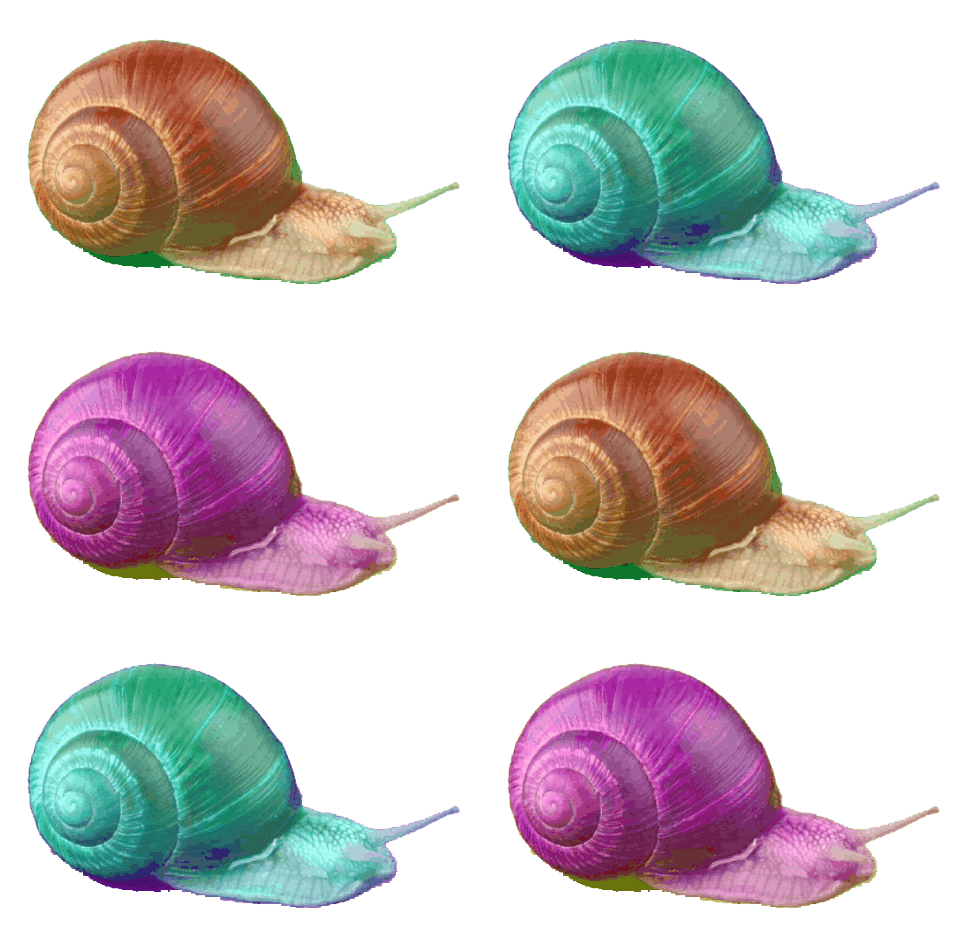
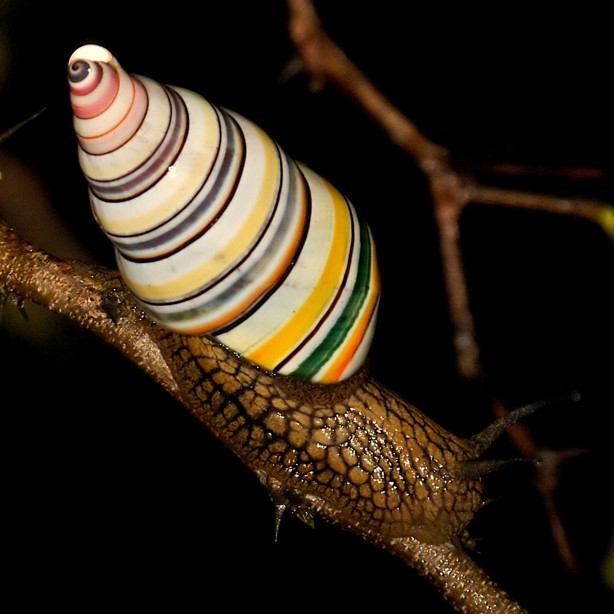
It has been determined that there are about 40,000 species of land snails, each with a different body pigment and shells with different beautiful patterns and shapes.
Shell forms :
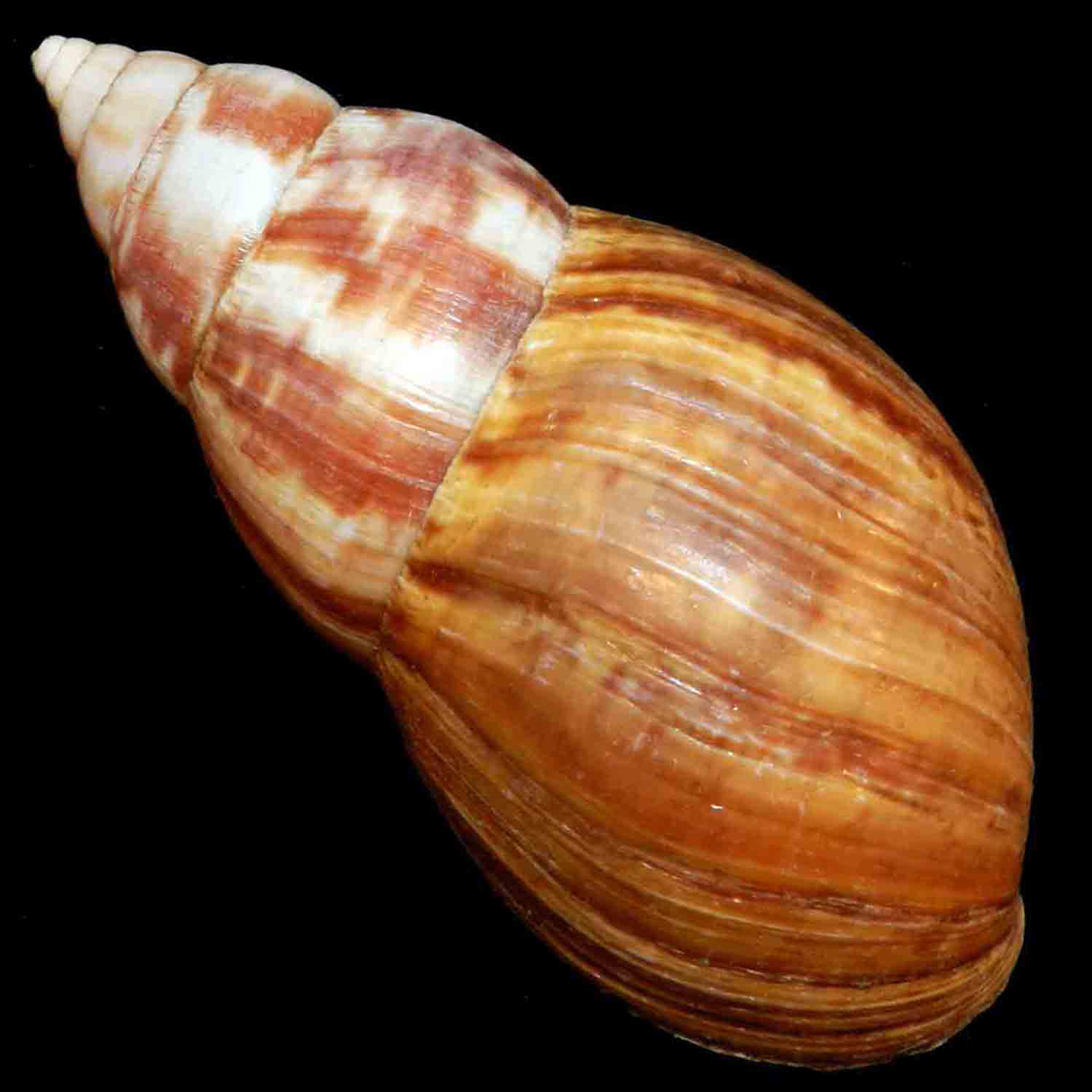 |
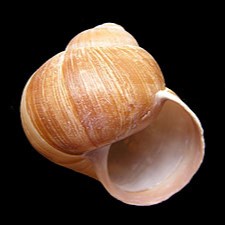 |
| Conical | Globose |
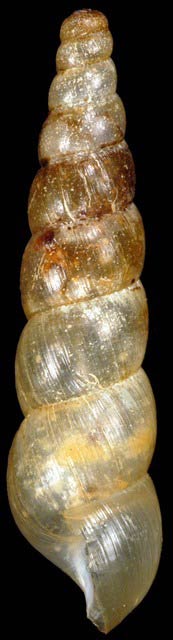 |
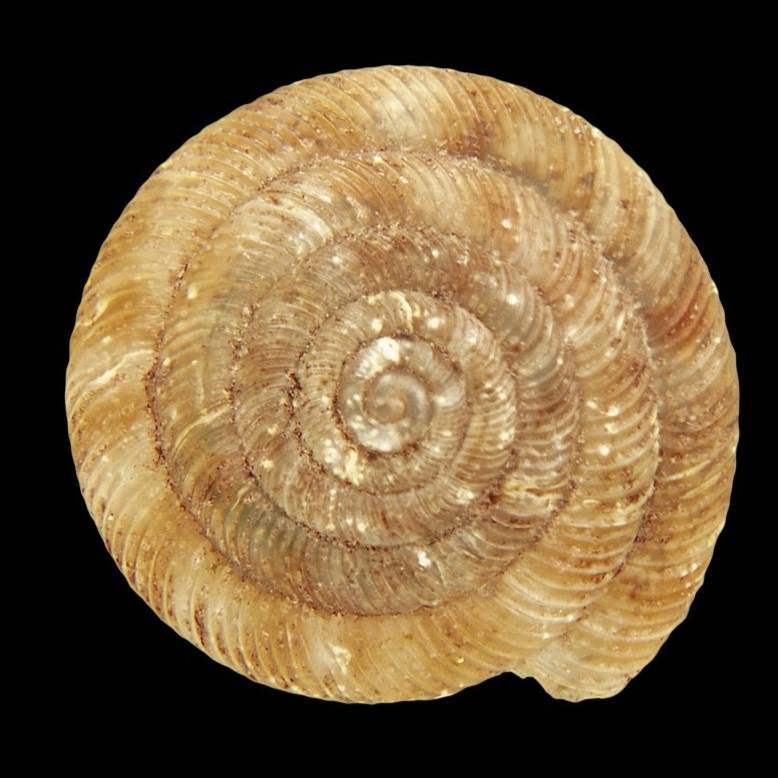 |
| Turreted | Discodial |
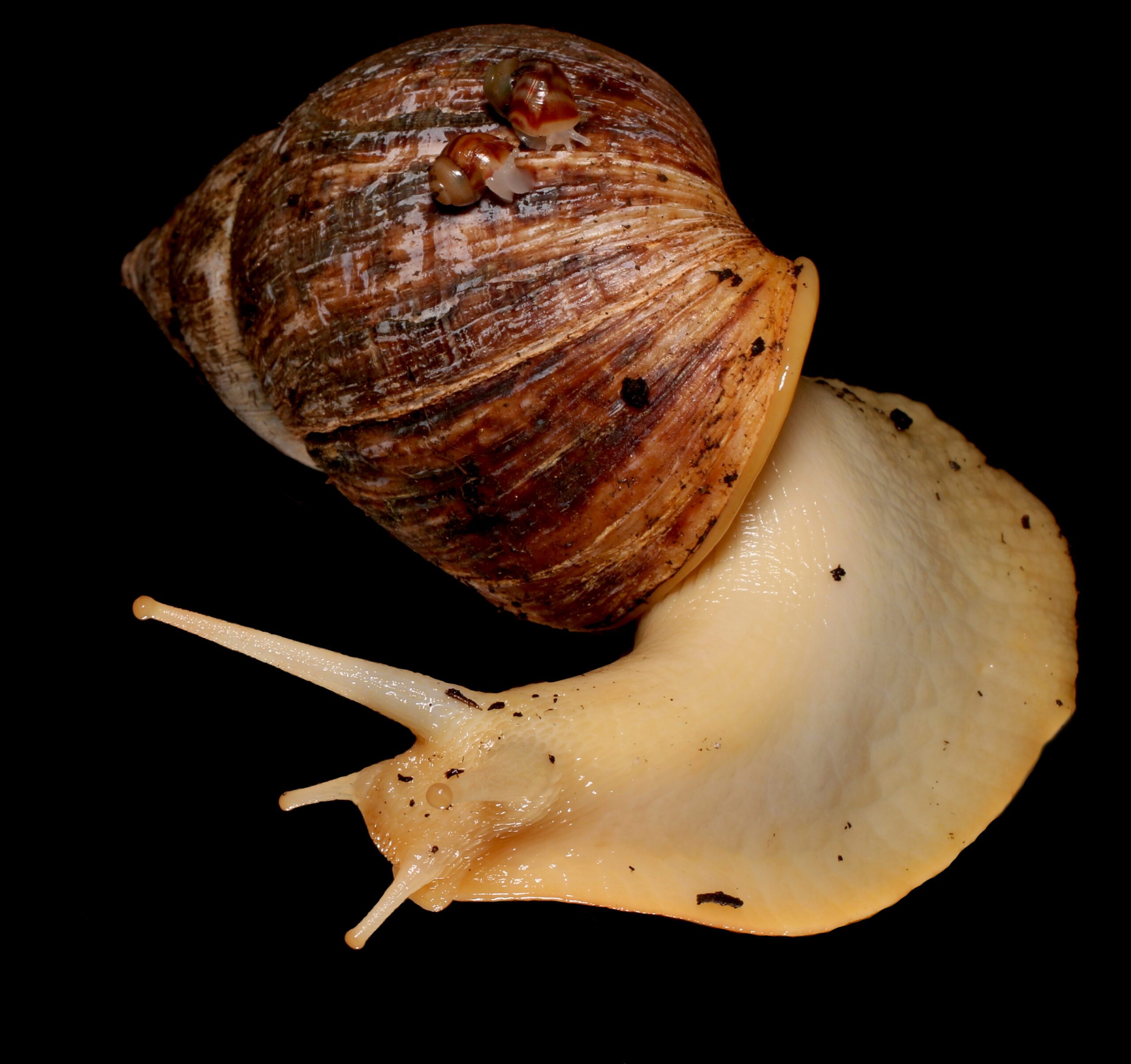
Body pigments :
 |
 |
 |
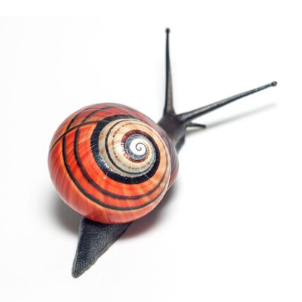 |
| Albino | Brown | Yellow-ish | Black |
The average snail's diet varies greatly depending on the species, including different feeding styles from herbivores to highly specialized feeders and parasites. Some snails like Euglandina rosea, or rosy wolfsnail, are carnivorous and prey on other snails. However, most land snails are herbivores or omnivores. Among land snails, there is also a large variation in preference for specific food. For example, Cepaea nemoralis, or the grove snail, prefers dead plant material over fresh herbs or grasses. Age may also impact food preference, with adult grove snails showing a significantly larger preference for dead plant material than juvenile grove snails. Other snails, like the generalist herbivore Arianta arbustorum, or copse snail, choose their meals based on availability, consuming a mix of arthropods, wilted flowers, fresh and decayed plant material, and soil. Generally, land snails are most active at night due to the damp weather. The humid nighttime air minimizes water evaporation and is beneficial to land snails because their movement requires mucus, which is mostly composed of water. In addition to aiding movement, mucus plays a vital role in transporting food from the gill to the mouth, cleansing the mantle cavity, and trapping food before ingestion.
Throughout history, snails have been kept as pets. There are many famous snails like Jeremy and others in fiction.
Snails are extremely easy animals to keep. They need a terrarium appropriate for the size of the snail according to the species and a varied diet depending on whether the snail is carnivorous or herbivorous. Every snail needs calcium to keep its shell healthy and to prevent the colors from fading. For this reason, dry crushed eggshells are also included in their diet.
In French cuisine, edible snails are served, for example, in Escargot à la Bourguignonne. The practice of raising snails for food is known as heliculture. For breeding purposes, snails are kept in a dark place in a wire mesh cage, with dry straw or dry wood. For this purpose, pruned grape vine branches are often used. During the rainy season, snails emerge from hibernation and secrete most of their mucus onto dry wood/straw. The snails are then prepared for cooking. Their texture, when cooked, is slightly chewy and tender.
In addition to being consumed as gourmet food, several species of land snails provide a readily available source of protein for many people in impoverished communities around the world. Many land snails are valuable because they can feed on a wide range of agricultural waste, such as fallen leaves from banana plantations. In some countries, giant African land snails are commercially farmed for food.
Land snails, freshwater snails, and sea snails are eaten in many countries. In some parts of the world, snails are fried. For example, in Indonesia, they are fried as satay, a dish known as sate kakul. The eggs of some snail species are consumed in a manner similar to the way caviar is eaten.
In Bulgaria, snails are traditionally cooked in the oven with rice or fried in a pan with vegetable oil and red pepper powder. Before being used in these dishes, however, they are boiled thoroughly in hot water (up to 90 minutes) and manually removed from their shells. The two species most commonly used for food in the country are the vine snail and the garden snail.
